
The Golden Rules: Rescuing Your Vintage Holos Without Ruining Them
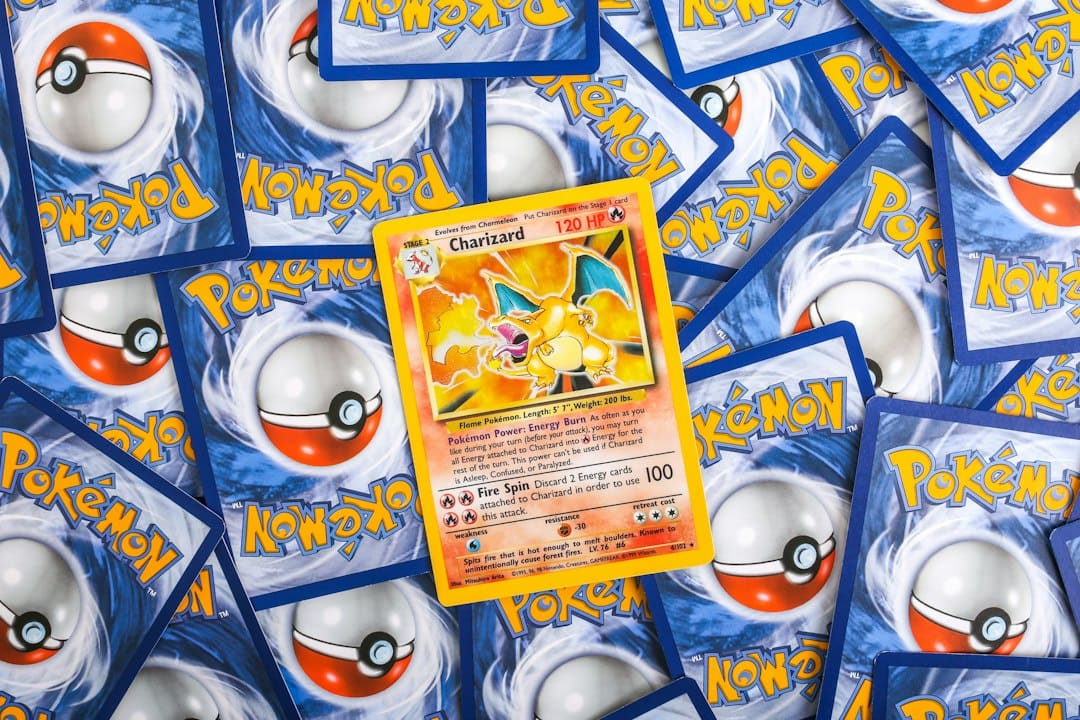
We have all experienced that sudden rush of nostalgia. 📦 You crawl up into the attic, pop open an ancient, dust-caked shoe box, flick open your original 1999 school binder, and pull out a shadowless Charizard or a stunning neo-era Lugia. But then, your stomach takes an absolute nosedive. The holographic foil is smothered in sticky finger grease, trapped playground dirt, and decades of mysterious grime.
What is your immediate gut reaction? For many collectors, it is running straight to the kitchen sink for an antibacterial wipe, some dish soap, or a spritz of glass cleaner.
Stop right there! Put down the cleaning bottle and take a deep breath. 🛑
When learning how to clean Pokémon cards without destroying their value, you must remember one fundamental truth: a collectable trading card is not a plastic gaming coaster. It is a fragile, multi-layered sandwich made of compressed cellulose paper fibers, sensitive inks, delicate chemical coatings, and an ultra-thin sheet of metallic foil. If you hit that sandwich with liquid or chemical solvents, you risk causing permanent water damage, stripping away the factory gloss, and delaminating the card forever.
True card conservation requires infinite patience, specialized dry tools, and the wisdom to know when to leave things alone. Before you risk destroying a precious childhood relic, always test your techniques on common energy cards first. If you want to see how dedicated card whisperers rescue beat-up grails using non-invasive techniques, check out the fine-art methods behind how to clean Pokémon cards with YIAN Card Restore before testing risky methods on your own collection.
Grab a cup of tea, settle in, and let us explore how trading cards are actually built, how to safely clean light grime at home, why commercial DIY chemical kits can backfire, and how to store your collection so it survives for another twenty-five years! ☕✨
The Anatomy of a Pokémon Card: Why DIY Cleaning Goes Wrong
To clean a trading card safely, you first need to respect the mechanical engineering sitting in your palm. A vintage or modern card is a tiny architectural wonder made of three distinct layers:
- The Core Base: Two outer sheets of smooth paper stock bound together by an opaque black, blue, or purple adhesive core (which stops cheaters from shining a light through their cards during competitive tournament matches).
- The Print Layer: Specialized offset or digital lithographic inks applied across the surface. On holo rares, secret rares, or modern ultra-rares, this includes an ultra-thin sheet of metallized plastic film and micro-etched surface textures.
- The Factory Finish: A micron-thin, clear protective varnish designed to guard against minor friction while giving the card its signature semi-gloss sheen.
Why does this structure make DIY cleaning so hazardous? Because paper fibers act like thirsty microscopic sponges. 🧽
When water touches an exposed card edge, a white scratch, or a hairline crease, the cellulose fibers instantly drink that moisture up. As those fibers absorb liquid, they expand unevenly. When they dry out later, they never return to their original, flat alignment. Instead, you get warped cardstock, permanent rippling, and cloudy water tides across your artwork.
Commercial cleaning sprays, alcohol wipes, and chemical solutions are even worse. Household solvents act like paint strippers. They eat through the thin factory varnish, dissolve the vintage inks, and leave unsightly milky patches across the foil. Abrasive polishes are just as dangerous: they buff away the tactile fingerprint textures found on modern secret rares or completely rub away the classic yellow borders of vintage Wizards of the Coast (WotC) cards.
Before you test any unverified cleaning trick on an expensive classic, take a minute to look up your card and compare price references with YIAN Card Tools to see what it is actually worth in raw, authentic condition. You might find you are holding a card worth hundreds of pounds! 📈
Safe Home Cleaning: Step-by-Step for Everyday Collectors
Can you clean cards at your desk without expensive workshop equipment? Absolutely! But you should strictly limit your home cleaning to dry, non-invasive methods designed to lift loose dust and superficial finger oils.
Here is our tried-and-tested, low-risk workflow:
1. Set Up a Clean Workspace
Never clean cards at a messy computer desk or anywhere near drinks. Clear a wide, firm table. Roll out a pristine gaming playmat, or lay down a clean sheet of greaseproof baking parchment to act as a barrier. Thoroughly wash your hands with plain, fragrance-free soap to scrub away skin oils, and make sure they are completely dry before you touch a card.
2. The Dry Dusting Phase (Crucial Step!) 🖌️
Never jump straight to wiping a dirty card with a cloth. Dust is made of tiny, hard particles of silica, sand, and grit. If you drag a cloth across a dusty holo, those particles act like sandpaper, carving dozens of permanent micro-scratches into the surface.
- Pick up a clean, ultra-soft goat-hair or camel-hair artist brush (or a brand-new, fluffy cosmetic makeup brush).
- Sweep the brush feather-lightly across the face of the card, moving from the center out toward the edges.
- Apply zero downward pressure. Let the fine tips of the bristles float the dust away.
3. Gentle Buffing for Fingerprints
If your card has cloudy smudges from everyday handling, you can safely lift them using an optical-grade microfibre cloth (the kind used for high-end camera lenses or spectacles).
- Lay the card perfectly flat on your clean surface.
- Protect the card by holding it down with one finger resting on an empty penny sleeve, preventing your skin from leaving fresh oils on the cardstock.
- Using your other hand, wrap the clean microfibre cloth over a fingertip and buff the smudge using tiny, gentle circular motions.
- Check your progress under an angled desk lamp. If the smudge does not lift with feather-light pressure, stop immediately. Never push down hard, and never breathe moist air onto the card surface!
If you want to maintain your cards properly after an initial tidy-up, read through our detailed breakdown on how to track, value, and protect your Pokémon cards with YIAN to build bulletproof collection habits.
DIY Cleaning Products vs Professional Workshop Care
Jump on YouTube or TikTok, and you will see card hobbyists demonstrating commercial cleaning kits packed with mysterious chemical sprays, thick polishing compounds, and plastic clamping blocks. Products from brands like Kurt's Card Care have gained a huge following among collectors trying to prep raw cards for grading companies like PSA, BGS, and CGC.
While these kits can be tempting, taking abrasive polishes to fragile, vintage cardstock involves significant risks:
| Feature | Commercial DIY Kits (e.g., Kurt's Card Care) | Professional Workshop Care (YIAN) |
|---|---|---|
| Primary Method | Chemical spray bottles and abrasive buffing creams applied by hand | Purely non-invasive mechanical techniques; zero liquids added to paper core |
| Risk Factor | High risk of stripping textured coatings, removing border ink, or leaving chemical residue | Safe, controlled, fully insured process with unboxing and step-by-step progress filmed |
| Cost | £30 to £80+ for bottles, applicators, and tools, plus your own risk | Simple fixed pricing: £30 per card plus tracked return postage |
| Card Safety | DIY user error can ruin rare foils, vintage Japanese promos, or solid borders | Card inspected upon arrival; nothing is touched until you approve a detailed plan |
| Grading Transparency | Vague claims about grade increases; risk of third-party grading rejection for altered surfaces | Clear, honest advice on which work meets grading criteria and which carries risks |
The Real Risks of Home Chemical Solutions
Commercial buffing creams often use micro-abrasives suspended in mineral spirits or light oils. They work by grinding down the edges of scratches to make them less visible. But on modern cards—such as Alternate Arts or Secret Rares—that abrasive paste can easily scour away the laser-etched texture lines! ⚠️
On vintage holos, liquid compounds can seep beneath the foil layers through unseen micro-cracks, causing cloudy delamination weeks later. If polish is allowed to dry, or if you press too hard with an applicator, you run the risk of moving the ink layer entirely.
If you are dealing with a valuable holo, relying on unpredictable liquids at your kitchen table is a massive gamble. When you need expert help without the guesswork, you can get a free photo quote from our UK workshop to see what can be safely flattened or cleaned before spending a penny on supplies.
The Professional Alternative: How YIAN Restores Treasured Cards
When a card suffers from serious problems—like crushed corners, deep holo scratches, severe surface grime, or warped paper—home remedies quickly hit their limits. That is when specialized conservation becomes the right choice. 🔍
YIAN operates a dedicated workshop in the UK that restores Pokémon cards, one card at a time, for passionate collectors throughout the UK, Europe, and the United States. Rather than slathering cards with chemical sprays and crossing fingers, YIAN relies on gentle, manual conservation techniques using precision tools.
Standard workshop restoration is completely non-invasive:
- Grimy, stuck-on playground dirt is cleared from the surface.
- Light scratches and holo wear are carefully mitigated.
- Dents, indentations, and binder-ring impressions are gently eased out using controlled pressure.
- Bent corners are realigned back into place.
- Crucially, zero foreign chemical substances are added to the cardstock!
For vintage cards suffering from edge chips and corner whitening, YIAN also offers an optional, highly conservative color touch-up upon request. This is strictly limited to minor white spots under 1mm on classic yellow borders or card backs.
If you have a vintage favorite with an awkward corner crease or a deep dent, you can chat with YIAN on WhatsApp to get honest, friendly advice on what is realistically possible.
You can also browse our online Pokémon Card Tools for your collection to check live card variants, manage your personal binder sets, and review recent auction values.
Whenever you find yourself hesitating over a card with fragile paper or missing foil, it is always safer to trust the steady hands at Pokémon card restoration from YIAN than to risk permanently creasing a childhood favorite with improvised kitchen hacks. 🛠️
Real Collector Experiences: Trust and Transparency
Sending a treasured childhood card through the post to someone you have never met in person can feel nerve-wracking. We understand! Cards hold deep emotional memories of school swaps, holiday gifts, and beloved family moments. That is why complete transparency is the backbone of real card conservation.
Take a look at what genuine collectors had to say after seeing their cards restored:
"I sent two retro Pokémon cards to Yian for repairs and cleaning, and I couldn’t be happier with the results—they look like new! She kept me informed throughout the process, explaining what needed repairing and providing regular updates and detailed reports. Amazing work and excellent communication. I’ll definitely be using Yian again. Thank you!"
— Andrew Dave (Customer, UK, Trustpilot review, 25 October 2026) 🌟🌟🌟🌟🌟"Absolutely Amazing service from start to finish, would happily recommend to anyone wanting to bring life back to their Pokémon cards… Have sent 3 cards up to now and have more to send. A thoroughly transparent and efficient service throughout."
— James Kean (Customer, UK, Trustpilot review, 27 October 2026) 🌟🌟🌟🌟🌟
For younger hobbyists who want to keep their favorite deck pieces in great shape, YIAN also runs a Kids Free initiative, where eligible young collectors receive complimentary conservation funded by supportive community sponsors.
Want to see how the work looks in practice? You can watch real before-and-afters from the workshop on TikTok @yian.uk to watch bent corners flattened and decades of stubborn surface grime lifted away in real time. 📱👀
Restoration vs Third-Party Grading: An Honest Look
The card collecting community often sees fiery debates about card restoration and professional grading. One group claims cleaning any card counts as an "artificial alteration," while another claims DIY sprays can turn beat-up, creased cards into guaranteed PSA 10 gems.
Both of these extreme claims miss the mark. Let us look at the practical reality:
1. Personal Binder Collections
If a card is destined for your personal binder, a family display case, or your personal desk frame, your opinion is the only one that matters! A conservator's goal is to stabilize the card, improve its visual presentation, and preserve its structural integrity. Whether a restored card counts as altered is entirely down to what you want from your personal collection.
2. Submitting to Grading Companies (PSA, CGC, BGS, ACE)
When preparing cards for third-party authentication, community opinions take a back seat to the published rules of the grading company you choose:
- Human Evaluation: Card grading is an expert opinion delivered on a single afternoon. Different graders can view surface wear differently, and grading policies evolve over time.
- Chemical Detection: Major grading companies inspect cards under specialized lighting to spot foreign substances. Adding silicone oils, heavy recoloring, or chemical gloss will lead to an "Altered" designation or an outright rejection.
- The Non-Invasive Advantage: Purely mechanical conservation—like dusting, gently easing out a dent, or flattening a curl—does not add foreign chemicals, making it far safer for grading submissions than liquid polish.
Important grading note: No honest restorer will ever promise a specific numerical grade or guarantee a card will pass third-party authentication. Grader policies change, and subjective human judgment is always involved. YIAN assesses every card before touching it, explaining transparently which methods meet standard grading expectations and which techniques, such as colour touch-up, carry a risk of being flagged.
Archival Storage: Keeping Your Cards Pristine at Home
Once your cards are clean and flat, your next job is making sure you never have to clean them again. Environmental storage mistakes cause far more damage over time than everyday handling.
1. The Double-Sleeving Shield 🛡️
Never drop a raw, unsleeved card straight into a rigid plastic top loader! Top loaders are made of rigid PVC that can rub against the holographic foil and cause fine scratches as the card moves around.
- Step A: Slide the card into an exact-fit inner sleeve inserted from the top down.
- Step B: Slide that inner-sleeved card into a standard, acid-free polypropylene penny sleeve from the bottom up. This inverted arrangement creates a tight seal that keeps out dust and ambient humidity.
- Step C: Place that double-sleeved card into a clean top loader or semi-rigid card saver for complete protection.
2. Ditch Ring Binders for Good 🚫
Throw away old metal three-ring binders! When you turn full pages in an old ring binder, the heavy metal rings can press against the inner column of cards, leaving an ugly, permanent indentation called "ring bite."
Instead, upgrade to a side-loading, zip-up binder built with archival-safe, acid-free pages. Side-loading pockets prevent cards from sliding out when tipped, and the perimeter zip blocks out airborne dust, pet hair, and moisture.
3. Manage Humidity and Sun Exposure ☀️
Ever wonder why vintage foil cards turn into potato crisps? Foil cards curl because the paper back absorbs ambient moisture and expands, while the metallic front foil remains fixed in place. The expanding back forces the edges of the card forward into a distinctive "C" curve.
- Store your binders in an interior room with steady temperatures year-round.
- Avoid damp basements, unheated garages, and outside walls prone to condensation.
- Keep cards away from windows. Ultraviolet (UV) rays can bleach card inks within months, stripping away bold reds and yellows.
- Drop a food-grade silica gel pack into your storage boxes to keep humidity spikes under control.
If you are inspecting an entire collection and discover heavy creasing or deep indentations, read our straightforward steps to get a quote for Pokémon card restoration before you risk making the card stock worse with home experiments.
Common Cleaning Mistakes to Avoid at All Costs
Before you start organizing your cards, make sure you steer clear of these five common pitfalls:
- 👅 Licking or Breath Fogging: Human saliva contains digestive enzymes (such as amylase) that actively break down starches and coatings. Never spit on a rag or blow warm, moist breath onto foil to lift a smudge!
- 🧴 Rubbing Alcohol or Hand Sanitizers: Pure isopropyl alcohol is a fast-acting solvent. On older WotC cards, it can strip away the protective clear coat and dissolve the underlying inks into your cloth.
- 🧻 Kitchen Paper Towels & Tissues: Kitchen rolls and facial tissues are made from wood pulp fibers. They feel soft to your hands, but those microscopic wood fibers will scour permanent swirls into delicate holographic foil.
- 🧼 Pencil Erasers or Baking Soda: Erasers and abrasive powders rely on physical friction to rub off surface dirt. They will scour away the factory sheen and leave behind an ugly, cloudy matte patch.
- ♨️ Direct Ironing: Trying to flatten a card with a household clothes iron or hair straightener can scorch the paper core, bubble the foil film, and melt the internal glues.
Safe Card Care Brings Peace of Mind
Protecting and maintaining your Pokémon collection does not require dangerous home chemistry experiments. Armed with a clean playmat, an ultra-soft camel-hair brush, an optical-grade microfibre cloth, and quality archival sleeves, you can safely tackle light dust and fingerprints right at home.
Whenever you run into challenging flaws—like deep dents, edge scuffs, or grime that dry buffing will not budge—remember your limits. Trying to force a repair with household liquids usually leads to regret. When a favorite card needs specialized attention, get in touch with YIAN Card Restore for your Pokémon cards, where your cards will receive the gentle care, precision, and respect they deserve. Happy collecting! ⚡🎴