
The Truth About Vintage Card Damage: What Eases Out and What Stays Forever
Pulling an old ring binder down from the loft is pure, unfiltered magic ✨. You open the dusty plastic pages, flip past the energy cards, and suddenly you are ten years old again, standing on the school playground trading snacks for shiny cardboard.
Then reality sets in.
You spot a thick smear of mysterious playground grime across your Base Set Blastoise. Your beloved shadowless Charizard has an ugly fingernail indent, and the holographic foil looks like it was cleaned with wire wool. Heartbreaking, isn't it? 💔
Naturally, your first instinct is to hunt for solutions. Can professional vintage Pokémon card restoration actually turn back the clock, or are these childhood treasures doomed to stay battered forever?
The honest truth sits right between wild optimism and grounded reality. Professional conservation works genuine wonders on everyday handling wear, but it simply cannot perform miracles on shredded paper fibres. Surface muck, cloudy holofoil, greasy thumbprints, and soft bent corners often improve dramatically when treated with patient, non-invasive techniques. At the same time, deep structural creases, severed paper, heavy ink gouges, and dark water tide-marks are permanent battle scars. They are baked into the card's history forever.
Understanding the boundary between fixable wear and irreversible damage will save you from well-meaning home disasters. Grab a bottle of rubbing alcohol or a kitchen wet wipe, and you will instantly strip vintage inks, leaving behind an ugly, permanent bleached patch. Paper is an organic, breathing material. An ethical restorer treats it like fine art, carefully examining paper grain, print layers, and delicate foil films to decide what can be coaxed out safely without adding synthetic chemicals.
Whether you want a sparkling showstopper for your personal display, want to see how to track, value, and protect your Pokémon cards with YIAN, or hope to prep a childhood grail for third-party grading, knowing what is genuinely repairable helps you set sensible expectations before anyone touches your cardboard gold.
Let's dive into the anatomy of these vintage treasures and explore what can truly be saved. 🔍
Why Vintage Pokémon Cards Behave Differently to Modern Cards
Have you ever held a brand-new, modern Pokémon card next to an original 1999 Base Set card? They feel completely different in the hand. Modern cards are stiff, slick, and coated in high-tech plastic films and textured etching.
Vintage cards from the golden Wizards of the Coast (WotC) era (1999 to 2003) were printed on traditional, porous playing card stock. Because of how they were manufactured over two decades ago, they react to moisture, heat, and physical pressure in totally unique ways.
The Anatomy of Vintage Card Stock
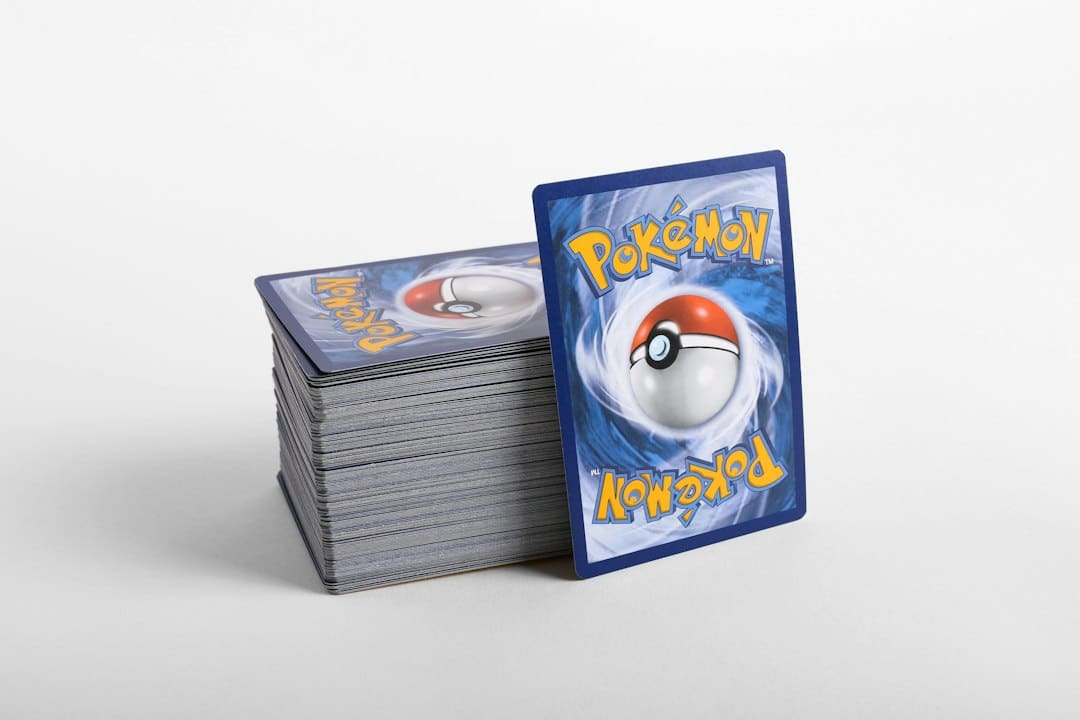
Vintage English cards feature an intricate multi-layered structure: an inner cardboard core sandwiched between printed front and back paper plies, laminated together with an opaque blue adhesive. This iconic blue core prevents people from seeing through the card under bright lights, but it also creates specific preservation quirks:
- Uncoated, Thirsty Card Backs: The deep blue reverse of a vintage Pokémon card has virtually zero protective varnish. It behaves like high-grade blotting paper. It absorbs humidity, sweat, and spilled drinks in seconds, drawing foreign oils deep into the raw paper fibres where they settle permanently.
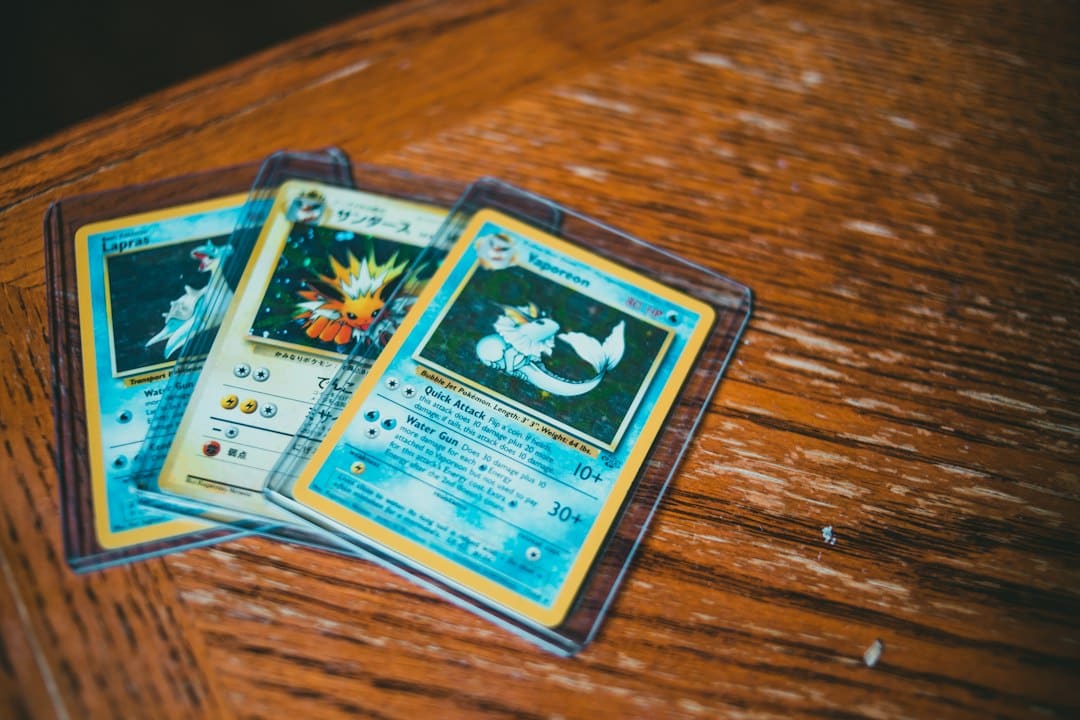
- The Fragile Metallic Foil Film: On holographic cards, an ultra-thin layer of vacuum-metallised foil sits immediately beneath the printed illustration. The coloured ink on top is translucent so the metallic sheen shines through. However, this foil film is softer than the surrounding paper. The slightest bit of grit ground into the card creates thousands of microscopic scratches that scatter light and turn the vibrant foil cloudy and flat.
- Soft, Unforgiving Borders: Modern ultra-rares use dense card composites that resist minor impacts. Vintage cards, by contrast, use softer natural wood pulp. Their classic sunny-yellow borders crush under the slightest thumbnail pressure or inside rigid plastic binder pockets.
Because vintage cardboard is so uniquely delicate, DIY kitchen-table experiments carry massive risk. If you are ever staring at a damaged card under your desk lamp feeling torn about what to do, you can chat with YIAN on WhatsApp to get honest, professional advice before attempting anything risky on your own. 💬
What Can Be Restored: Issues That Often Improve
Let’s get into the good news! 🎉
Vintage cards are resilient little time capsules. If the card's physical paper core remains structurally sound, several common types of collector wear respond brilliantly to non-invasive workshop conservation.
1. Surface Dirt, Wax, and Play Grime
Think back to how cards were treated in 1999. They were shoved into school trousers, swapped over sticky school lunches, dropped on wet playground tarmac, and left inside dusty shoeboxes for twenty years. Over time, atmospheric moisture mixes with skin oils, creating an amber film of stubborn dirt across the surface.
This grime acts like a murky filter, muting Ken Sugimori’s iconic watercolour shades. Through delicate dry and micro-moisture cleaning techniques, these foreign contaminants can be loosened and lifted away without disturbing the original factory inks beneath. Once the grime layer vanishes, the colours pop with the same visual punch they had the day the booster pack was ripped open. 🌈
2. Holographic Scratches and Cloudiness
Holo clouding—often called "silver haze"—is the bane of any vintage collector's existence. Over twenty-five years, exposure to air causes micro-oxidation, while friction against plastic penny sleeves buffs hundreds of hairline scratches into the surface.
While deep scratches that gouge right through the ink down to the raw foil cannot be made to disappear magically, light surface abrasions and milky oxidation haze can be significantly diminished. Non-abrasive, micro-level polishing realigns how light strikes the foil surface. Suddenly, that flat, dull galaxy pattern erupts back into vivid red, gold, and green sparkles. ✨
3. Minor Dents, Impressions, and Soft Bends
Have you ever bought a card only to discover a dreaded ring-binder indentation running right across the top border? Or perhaps someone pushed down too hard with a ballpoint pen on a piece of paper resting over the card?
Paper is made of interwoven cellulose fibres. It has an organic "memory." Under the right conditions, those crushed fibres can be encouraged to relax back into their original shape. By using targeted humidity chambers and micro-mechanical flattening tools—without ever soaking the blue glue core—a skilled technician can gently lift depressions and smooth out soft corner bends.
Curious to see this mechanical wizardry in action? You can watch real before-and-afters from the workshop on TikTok @yian.uk to see how bent corners and severe binder indentations are eased back into flat alignment. 📱
What Cannot Be Restored: Permanent Paper Damage
Honesty and clear boundaries matter more than anything in card collecting. While some internet forums will promise that you can "iron out" or "fill in" any defect, the reality is that certain structural wounds permanently alter the paper pulp.
If someone promises they can make the following flaws disappear without altering the card, walk away! 🛑
Deep White Creases
There is a massive difference between a bend and a crease.
- A bend means the paper fibres have curved, but the surface skin remains intact.
- A crease means the card was folded past its mechanical breaking point. The inner cellulose fibres have snapped, the blue glue layer has split, and the surface ink has sheared clean off, leaving behind a glaring white fault-line.
While controlled compression can flatten the card so it no longer bulges inside a semi-rigid sleeve, that white fracture mark is a permanent scar. The paper fibres are physically broken; short of re-pulping the card, nothing will reconnect them.
Substantial Ink Loss and Scratches
If a playground scuffle or an abrasive surface scrape ripped away the printed ink, the artwork is gone. It does not exist anymore.
Aside from minute, clearly declared colour touches on outer borders, you cannot simply paint broad sections of a card back in. Trying to paint over lost artwork on an illustration turns a collectable card into an obvious, messy forgery. True card conservation is about revealing the original item beneath the wear, not painting a replica over the top.
Water Staining and Paper Swelling
Water is cardboard's worst enemy. When liquid penetrates the edge of a vintage Pokémon card, the cellulose pulp expands like a sponge. As that water slowly evaporates, it carries natural wood tannins, airborne salts, and dissolved dyes to the outer edge of the wet spot, depositing them in an unsightly, dark brown ring known as a "tidemark."
Worse, moisture dissolves the water-soluble glue holding the card sandwich together, causing the layers to puff up and split apart (delamination). These water marks are chemically bonded to the wood pulp. They cannot be washed out, and trying to flatten swollen paper usually results in permanent crinkling.
Before committing your hard-earned cash to restore a heavily damaged survivor, take a moment to browse our Pokémon card tools for your collection to evaluate the card's raw baseline condition and weigh up current market values. 📊
Professional Workshop vs DIY Card Care Kits: An Honest Comparison
Spend five minutes on social media card groups, and you will inevitably see adverts for DIY cleaning kits, magic polishing creams, and conditioning balms from brands like Kurt's Card Care.
These products have done the hobby a massive favour by destigmatising card care and showing collectors that basic cleaning is a normal part of preserving history. But there is a monumental difference between experimenting with consumer kits at your kitchen table and entrusting your card to an experienced conservation workshop.
The Unseen Danger of the Kitchen Table DIY
Why do DIY kits ruin so many good cards? It comes down to paper porosity.
Most over-the-counter conditioning oils and cleansers were formulated for modern sports cards. Sports cards feature hard, thick UV-cured plastic coatings on both sides. You can wipe liquid across an NFL Prizm card without it sinking into the cardboard core.
Try that exact same trick on the uncoated blue back of a 1999 Jungle Pikachu, and the paper will drink the chemical carrier instantly. You will end up with an oily, translucent dark patch that permanently destroys the card's eye appeal and ruins any chance of grading.
Furthermore, applying uneven mechanical pressure with plastic handheld flattening tools often pinches the vintage paper stock, creating shiny "tool marks" or flattening the embossed card borders. One slip, and you turn a £200 Holo into a £10 damaged binder filler.
At YIAN, we eliminate those heart-stopping gambles. Every card is treated individually using dry, non-invasive conservation tools. No foreign oils, no mystery chemicals, and no silicones touch your cards.
If you are weighing up your options, you will love how straightforward professional care can be: restoration is £30 per card, so see what we can improve before you pay anything. 🏷️
The Question of Colour Touch-Ups: When Does It Make Sense?
Few topics spark more fierce debate among vintage collectors than colour restoration. Is it an artful touch-up, or does it cross the line into altering a card?
To answer that question, we have to look at what traditional conservation actually means. In world-class museum conservation—whether restoring a centuries-old oil painting or an ancient manuscript—the golden rule is: never do anything irreversible, and never obscure the original truth of the piece.
Standard, non-invasive card restoration never adds pigment to paper. However, collectors often find tiny edge nicks frustrating. When you look at an otherwise gorgeous vintage card with rich, vivid artwork, bright white dings along the edges draw your eye like a neon sign.
To help collectors who want a unified display piece, YIAN offers an optional, microscopic colour-fill service. But to keep the process completely ethical, we enforce strict boundaries:
- Strict Micro-Scale Limits: We only treat minute white edge specks under 1mm in size. We will never paint over missing artwork or redraw illustrations.
- Restricted Border Areas: Work is carried out solely on the solid blue card backs and the iconic yellow outer borders where factory ink has cleanly flaked off.
- Completely Optional: You make the call. If you prefer your cards completely untouched by pigment, we stick strictly to non-invasive cleaning and flattening.
- 100% Transparent Documentation: Every single microscopic touch is mapped, photographed, and listed on your service report.
- Zero Hidden Upsells: Micro-colour touches are fully included within the standard flat £30 restoration price.
For a cherished childhood binder, a subtle colour touch brings massive personal joy. It turns back the clock, allowing you to admire the card without your eyes drifting straight to edge dings. But what happens if you plan to send that card to an official grading house? 🧐
Restoring for a Personal Collection vs. Restoring for Grading
Before deciding which restoration path to take, ask yourself one crucial question: Where is this card going to live?
Your answer completely dictates the techniques we use in the workshop.
For a Personal Collection
If a card is destined for a protective binder, a custom display frame, or an extended-art magnetic case on your office desk, the rules are delightfully simple. The only person you need to please is yourself! 🥰
Our mission for personal collections is to maximize raw eye appeal. If relaxing a binder dent and touching in two tiny white spots on a yellow border makes your beloved childhood card look like a pristine gem in your binder, that restoration is a runaway triumph. We are here to help you enjoy your collection, free from the stuffy opinions of internet gatekeepers.
For Third-Party Grading (PSA, CGC, ACE)
Submitting cards to third-party grading companies changes the playbook entirely. Grading services inspect cards under stereoscopic microscopes, UV lamps, and high-intensity oblique lighting:
- Independent Standards Rule All: Grading companies operate under their own terms and conditions. What passes with one company might fall foul of another. A restoration is only successful for grading if the specific techniques used comply with that company's published guidelines.
- Technique Dictates the Slab: Gentle non-invasive dry cleaning, grime removal, and structural pressing routinely sail through grading submissions without issue. Because these methods add nothing to the card and merely remove foreign debris, grading services generally view them as acceptable conservation.
- The Absolute Danger of Colouring: Never add pigment to a card destined for a grading submission! If a PSA, CGC, or ACE grader spots added inks or foreign pigments along an edge, they will instantly tag the card as "Authentic Altered" or reject it outright without a numerical grade. If grading is your ultimate goal, notify us immediately—we will avoid pigment work entirely.
- No Grading Guarantees: Card grading is a subjective human process performed by individual graders on any given afternoon. Company policies evolve, grader moods vary, and lighting setups differ. No honest conservation workshop can ever promise or guarantee a specific numerical grade. Anyone making those promises online is misleading you.
If you are wondering whether an old favourite has grading potential, take the safe route first. Simply submit your card details to get a quote for Pokémon card restoration before spending money on non-refundable grading submission fees. 📝
What Real Collectors Say
Sending your prized childhood grails through the post requires tremendous trust. We treat every single card that enters our workshop as if it were the crown jewel of our personal collection.
Here is how vintage collectors describe their experience with our workshop team:
⭐⭐⭐⭐⭐ "I sent two retro Pokémon cards to Yian for repairs and cleaning, and I couldn’t be happier with the results—they look like new! She kept me informed throughout the process, explaining what needed repairing and providing regular updates and detailed reports. Amazing work and excellent communication. I’ll definitely be using Yian again. Thank you!"
— Andrew Dave (Trustpilot review, 25 October 2026)⭐⭐⭐⭐⭐ "Absolutely Amazing service from start to finish, would happily recommend to anyone wanting to bring life back to their Pokémon cards… Have sent 3 cards up to now and have more to send. A thoroughly transparent and efficient service throughout."
— James Kean (Trustpilot review, 27 October 2026)
How the YIAN Workshop Process Protects Your Cards
We know how nerve-wracking it feels to slip your childhood favourites into an envelope and hand them to a postal worker. That is why we run the UK’s most transparent, security-focused restoration workshop.
Every single step is documented, logged, and shared directly with you. 🛡️
1. Free Up-Front Photo Assessment
No blind guesswork. Snap two sharp photos of your cards (front and back, out of sleeves or top-loaders) and send them through our web portal. We assess up to 12 cards per submission and send back a clear, brutally honest analysis within two business days. If a card is too damaged to save, we will tell you straight away.
2. Honest, Flat-Rate Pricing
We hate predatory pricing models that charge you more money just because your card happens to be valuable. Professional restoration is a flat £30 per card plus return shipping, regardless of whether it is an unlimited Jungle common or a 1st Edition Charizard.
We also run our beloved Kids Free initiative. Young hobbyists who love Pokémon can have their favourite cards restored completely free of charge (covering only return postage), generously sponsored by our wonderful community supporters. 💛
3. Recorded Unboxing
From the moment Royal Mail hands your package over our counter, you are protected. We film every unboxing under studio cameras and instantly take macro reference photos under high-CRI lighting so there is never any question about the condition in which your card arrived.
4. You Retain Total Control
No tool touches your card until you have had your say. We send you an itemised condition report outlining our proposed steps. You review the roadmap, choose whether you want colour edge touch-ups included, and give formal approval before we proceed.
5. Accountable, Documented Workflow
Your card moves through an orderly pipeline: Received ➔ Photographed ➔ Approved ➔ Restored ➔ Inspected ➔ Returned. You receive updates throughout the process, giving you complete peace of mind.
6. Insured, Armoured Return Shipping
When conservation is complete, cards are sleeved in brand-new archival-grade inner sleeves, secured inside heavy-duty semi-rigids, protected between rigid reinforcement boards, and shipped using fully tracked, insured postal services. 📦
Curious about how your newly refreshed collection stacks up in today's active vintage marketplace? You can search the Pokémon catalogue and track your collection's value for free using our real-time price monitoring index.
Making the Right Choice for Your Vintage Cards
Restoring a vintage Pokémon card is not about faking a flawless modern PSA 10 or erasing honest history. It is about conservation, stewardship, and preservation. It is about safely stripping away the grease and grime of the last twenty-five years, releasing unnatural paper tension, and letting the breathtaking original artwork shine through unimpeded.
By sticking to non-invasive mechanical methods and steering well clear of risky kitchen-sink chemical hacks, you can safely preserve these precious pieces of pop-culture history for decades to come.
Are you ready to see what is possible for your childhood binder favourites? Jump over to our simple quote page where you can send two photos for a free restoration quote, no account needed, and our workshop team will happily walk you through your options.
If you are holding a damaged card right now and need rapid, transparent advice from an experienced conservator, reach out directly to YIAN Card Restore today. Let's bring those classic cards back to life! 🚀